

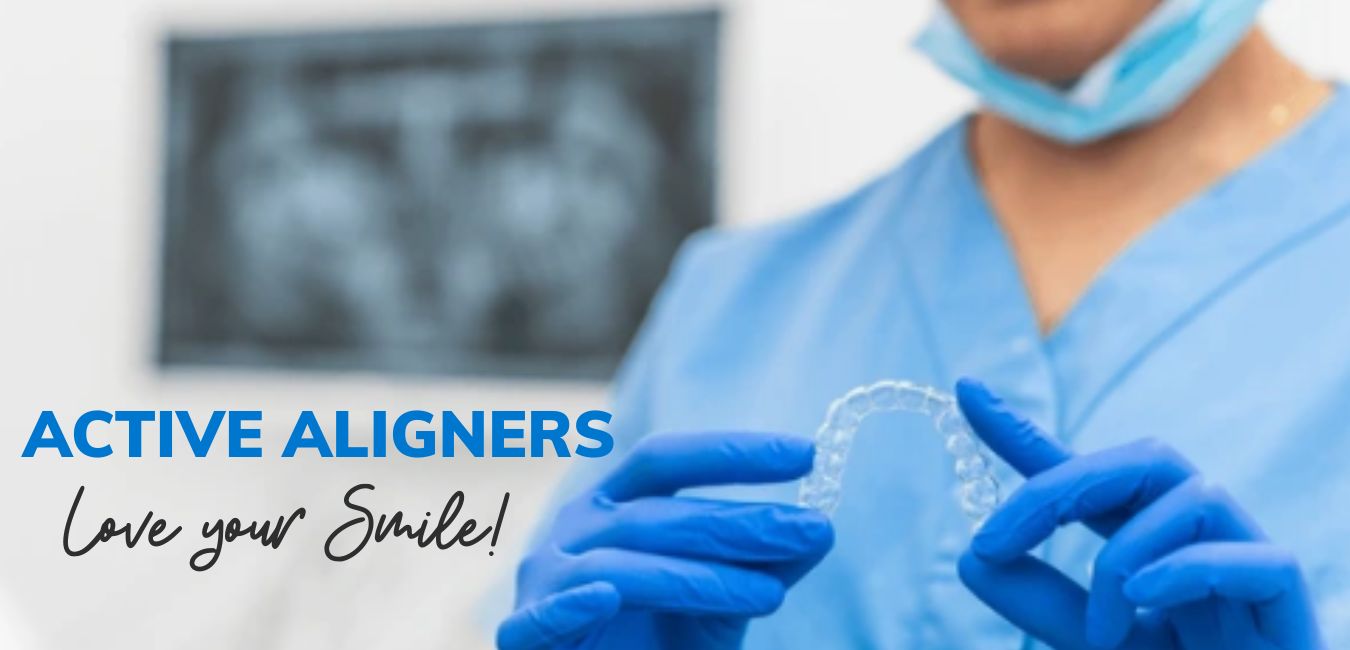
Why Active Aligners Is Built for the Next Phase of Global Growth
Clear aligner therapy has entered a new era.
What began as a premium, brand-driven orthodontic category has evolved into a practical, mainstream treatment solution in general dental practices worldwide.
In 2026, growth is no longer driven by novelty or marketing dominance. Instead, success in the aligner space is shaped by:
- Clinical confidence
- Practical digital workflows
- Accessibility and affordability
- Sustainable case volume
- Strong dentist partnerships
From inside the lab, one thing is clear: the market is not just expanding, it is maturing.
And maturity changes everything.
The Global Market Is Growing; But It’s Also Getting Smarter
Patients today are informed, comparative, and outcome-focused.
Across markets, from emerging economies to established private systems, patients are:
- Comparing aligner options
- Asking about value, not just brand recognition
- Prioritising discretion and comfort
- Expecting predictable timelines
- Viewing orthodontics as part of long-term oral health
Adult patients remain the primary growth driver globally. Young professionals, executives, and image-conscious adults are seeking treatment that integrates seamlessly into their lifestyles.
Teen adoption continues to expand, particularly where treatment is recommended and supervised by trusted clinicians.
For dentists, this shift requires more than simply offering aligners. It requires offering them with confidence, control, and clarity.
2026 Trend: Clinician-Led Models Over Consumer-Led Hype
One of the strongest global shifts in 2026 is the move back toward dentist-guided aligner therapy.
Across markets, we are seeing:
- Greater demand for professional oversight
- Increased scrutiny of direct-to-consumer models
- Stronger emphasis on diagnosis and structured case selection
- Growing preference for predictable, supervised treatment
The future of aligners is not DIY. It is clinician-directed.
Active Aligners was designed around this philosophy. It prioritises:
- Dentist-prescribed treatment
- Structured case assessment protocols
- Collaborative treatment planning
- Ethical positioning and long-term patient care
This is not a consumer marketing model.
It is a clinical partnership model.
And in a maturing market, that distinction matters.
Digital Dentistry: Simplified, Not Overengineered
Digital workflows continue to expand globally, but the most successful practices in 2026 are not necessarily the most technologically complex.
They are the most efficient.
Across international markets, practices operate in different ways:
- Fully digital with intraoral scanners
- Hybrid workflows combining digital and conventional methods
- Transitioning practices gradually adopting scanning
What they all need is flexibility.
Active Aligners supports both digital and conventional workflows, allowing integration without disruption. The focus is on practical treatment planning, not unnecessary complexity.
Technology should improve case predictability and workflow efficiency.
It should not increase overhead or create dependency.
In 2026, simplicity scales better than sophistication for its own sake.
Affordability as a Strategic Growth Lever
Globally, price sensitivity remains a significant factor in orthodontic decision-making.
Even in developed markets, patients are evaluating:
- Treatment cost versus perceived value
- Financing options
- Alternatives within the aligner category
Affordability does not mean lowering standards.
It means increasing accessibility.
Active Aligners enables dentists to:
- Offer competitive pricing structures
- Maintain sustainable margins
- Increase case volume
- Expand aligner access beyond premium-only patients
The practices experiencing the strongest growth are not those charging the highest fees; they are those creating scalable systems.
Volume, predictability, and partnership are driving profitability in 2026.
Adult-Led Demand with Expanding Teen Adoption
The adult segment remains the global cornerstone of aligner therapy.
Adults value:
- Discretion
- Comfort
- Reduced emergency visits
- Lifestyle compatibility
- Professional image
Teen adoption continues to grow steadily, particularly when positioned within a structured, supervised framework.
Active Aligners supports:
- Confident adult case planning
- Gradual expansion into suitable teen cases
- Integration of aligners into comprehensive treatment planning
Aligners are no longer positioned purely as cosmetic enhancements. They are now recognised as functional, preventive, and long-term oral health solutions.
The Power of Partnership in a Global Market
In a world dominated by multinational brands, one defining 2026 trend is the renewed importance of relationship-based support.
Dentists worldwide are prioritising:
- Responsive communication
- Practical case discussions
- Realistic treatment expectations
- Transparent pricing
- Ongoing clinical collaboration
Active Aligners competes not just on global prestige, but on partnership.
Responsiveness.
Relevance.
Reliability.
In a market that is maturing, relationship becomes a decisive competitive advantage.
Why Active Aligners Is Aligned with 2026
The next phase of aligner growth – globally – will be defined by:
✔ Clinician-led treatment models
✔ Practical digital integration
✔ Scalable affordability
✔ Adult-driven demand with teen expansion
✔ Strong professional partnership
Active Aligners was built around these principles.
Not as a trend.
Not as a luxury product.
But as a sustainable, dentist-focused solution designed for long-term growth.
As aligner therapy becomes mainstream worldwide, success will belong to systems that prioritise clinical partnership over marketing noise.
If you are looking to expand your aligner offering in 2026 with a structured, scalable and clinician-focused system, we invite you to explore Active Aligners.
Leave a Reply